
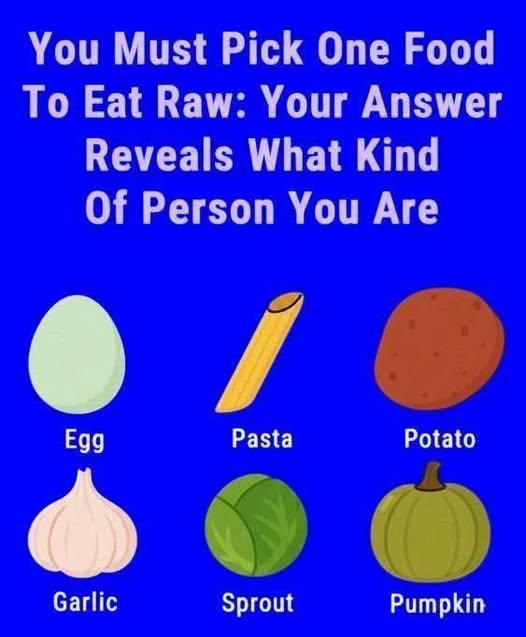
In an age where food plays a pivotal role in our social interactions and personal identities, a simple online prompt can spur profound discussions about the intricacies of human character. Recently, an intriguing question emerged on social media: “You must pick one food to eat raw. Your answer reveals what kind of person you are.” This seemingly light-hearted query not only sparked a flurry of comments but also ignited a vibrant tapestry of narratives that delves deep into the soul of culinary preferences and how they mirror our identities.
The original post received responses that rapidly proliferated across the digital platform, each comment illuminating unique perspectives and shedding light on the fascinating phenomenon of food as a reflection of our individuality. Some individuals passionately defended their choices, while others engaged in humorous debates about the deeper truths encapsulated within their raw food preferences. This article aims to explore these interactions and unpack the stories and memories that intertwined within a simple online conversation.
As the comments began to flow, a familiar pattern emerged. Those who chose crunchy carrots tended to see themselves as practical and down-to-earth. One user exclaimed, “Carrots might just be the most versatile of all vegetables—always reliable, always crunchy!” It was evident that they associated this choice with a certain level of dependability and resilience, core traits that many of us admire but may not always recognize in ourselves. In their minds, the carrot represented the hardworking individual who seems unshakeable, nurturing the idea that steadfastness is a virtue in the tumult of life.
On the other end of the spectrum were the individuals who gravitated towards more elaborate, perhaps emotional choices like ripe tomatoes. For them, tomatoes symbolized romance and passion. One commenter reminisced about their first love, declaring, “Eating tomatoes reminds me of long summer nights spent in the garden, hand-in-hand with someone special, just soaking in the warmth.” This connection between food and emotion reminds us that our culinary choices are often laden with memories, longing, and nostalgia, shaping our identities in ways we may not initially perceive.
One particularly captivating contribution came from a user who identified as a “raw foodie.” This individual took the discussions into a thrilling realm of personal storytelling, recounting an adventure where they survived a week eating solely uncooked meals after a camping trip gone awry. “I embraced the unusual,” they reflected, choosing raw mushrooms to represent their willingness to take risks and indulge in the unpredictable journey of life. This daring choice went beyond mere preference; it showcased a spirited approach to life itself, one that resonates with individuals who thrive on adventure and spontaneity.
However, the thread truly shifted into another gear when a user known as “CulinaryMystic” chimed in, urging fellow commenters to reflect on the feelings associated with their chosen raw foods rather than focusing solely on the food identity they felt it represented. This unexpected turn prompted participants to tap into deeper memory banks, reconsidering their choices through the lens of cherished experiences rather than rigid categorizations. CulinaryMystic’s invitation transformed the discussion into an exploration of meaningful connections forged through food—the types of connections that often transcend mere preference or habit.
As memories unfolded, it became apparent that food was more than sustenance; it was a vessel of connection and emotion. One woman shared a heartfelt recollection of biting into a juicy orange during a sun-soaked summer picnic surrounded by friends. “It was a moment of laughter, warmth, and childhood joy,” she expressed, encapsulating not merely a favorite fruit but a memory suffused with the essence of friendship and simple pleasures. Oranges became her symbol of happiness, spontaneity, and the carefree nature of childhood.
In similar conversations, those who opted for avocados contributed their own enriching narratives. They fondly recalled cozy weekend brunches spent with friends, noticing how the creamy texture mirrored their own approach to life: smooth, warm, and brimming with moments cherished amid laughter. “Choosing raw is about savoring the moment,” one participant noted, capturing the very essence of what it means to embrace life fully, much like breakfast in bed on a lazy Sunday. Avocados became synonymous with memories of comfort and ease, as they allowed individuals to celebrate simplicity in joyous, mundane rituals.
Yet, in the midst of harmonizing sentiments came a contrasting voice. A user named “SkepticalSophie” entered the conversation with a critique, branding the entire exercise as a gimmick that attempted to pre-categorize people based strictly on their dietary preferences. “What if I like my food cooked? Does that make me less adventurous?” she posed, immediately sparking a reflective dialogue about how our identities are not solely bound to the foods we consume. Her comment forced participants to rethink the rigid categories around their identities as well as what ‘adventurous’ truly means.
The discourse paused, creating space for a deeper analysis of the interplay between food and identity. Rather than igniting conflict, Sophie’s skeptical approach encouraged participants to explore the idea of fluidity in personal identity, illustrating that one’s culinary preferences do not define them entirely. This discussion revealed that it was possible for individuals to revel in the taste of both raw and cooked foods, highlighting how personal choices can traverse various experiences and dimensions of identity.
As the conversation developed, a thoughtful rapport blossomed among total strangers. From raw mushrooms embracing the thrill of the unknown to a simple orange serving as a reminder of laughter-filled moments, each choice morphed into a narrative that was rich and multifaceted. Participants began piecing together the idea that yes, our food choices can resonate with aspects of our personality, but they also serve as a canvas upon which we can paint our ever-evolving selves.
Furthermore, the commentary advanced into different realms, where participants expressed gratitude for various cultural foods that ultimately added to the diversity of perspectives. Beyond the familiar fruits and vegetables, discussions segued into global culinary insights, where others reflected on the importance of sharing meals from different cultures. Someone shared an intriguing perspective about raw fish, tying it to the beauty of Japanese sushi culture and the painstaking craftsmanship involved in preparing it. This added layer of appreciation demonstrated how food brings forth a sense of community and respect for diversity, uniting individuals through shared experiences.
Ultimately, this robust exchange revealed a beautiful tapestry of human experience imbued in each choice. The comment section transformed into a philosophical space, where individuals recognized that while culinary choices can illuminate facets of who we are, they also hint at who we could become. In sharing their stories, commenters offered glimpses of their individual journeys—ones filled with joy, adventure, skepticism, and a desire for connection. It underscored the notion that food, much like life, is not black and white but a textured palette of experiences waiting to be explored.
The emotional resonance of the discussions exemplified the intrinsic connections we forge with food. Through the discussions, participants from varied backgrounds engaged in purposeful exchanges. Those who once saw their raw food choices solely as a reflection of personal identity began to recognize food as a bridge between cultures and experiences, ultimately transcending labels. The in-depth interaction reaffirmed the notion that life—much like our culinary choices—should be savored, shared, and cherished.
In the end, what started as a seemingly simple prompt opened the floodgates of personal stories and reflections. The comment section became a vibrant tableau of identities forged through food, laughter, and connection. While each user chose their raw food for different reasons, they collectively cast a spotlight on the remarkable ability of food to foster community and a sense of belonging in an ever-changing world. This ongoing conversation remains a testament to the fact that every morsel we share has the potential to connect us to others, transcend boundaries, and deepen our understanding of ourselves.
So, the next time you find yourself faced with a choice—whether to consume your food raw or cooked—take a moment to reflect on the stories and memories that surface with each selection. For in those choices, wrapped in flavors and aromas, lies the essence of who we are and who we aspire to be. And as we continue to share our unique perspectives, let us remember that like our culinary journeys, our lives are best lived when savored, shared, and celebrated.